Passive Lock with Intelligent Key
A passive lock has no battery, no radio and no clock — nothing in it to maintain. The PLC-40 passive padlock is powered by the FPB-02 intelligent key for the moment it takes to open, and opens only for the right person, holding a valid permit, at the right step of the job.
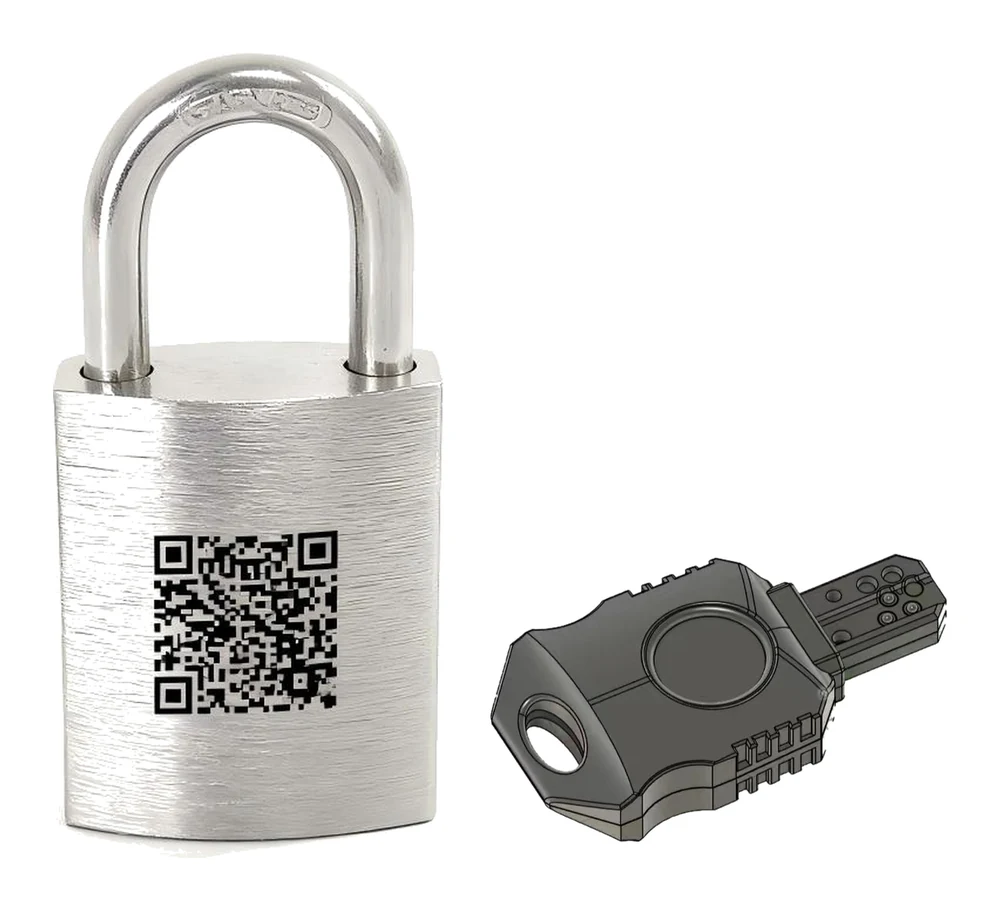
All the power and all the intelligence live in the key
The lock on the asset only checks and records. Everything that needs a battery, a clock or a radio is in the key, which the technician carries and charges.
The key powers the lock
The lock takes its power from the key through contacts in the bore, only while the key is inserted. There is no cell to replace, no charging port and no battery bay.
Fingerprint on the key
Up to 10 fingers are enrolled and matched on the key itself. Templates never leave it, so there is no biometric database on the platform to secure.
Work-order permits
Time-limited permits for a lock or a group of locks are loaded onto the key from the phone app. The lock checks them itself, offline. A key holds up to 500.
Switching-sequence interlock
A permit can carry a step number. The lock refuses to open out of order — the permit-to-work sequence is enforced by the hardware. A refusal is silent, and recorded.
Nothing to pick
The contacts sit in the side walls of the bore, so nothing is exposed outside. There are no pins and no wafers, and the key goes in either way up.
A lost key needs no re-keying
It is useless without an enrolled finger, its permits expire on their own, and it is revoked once on the platform. No lock is visited.
From the depot to the cabinet and back
The phone is needed when permits are loaded and records synced — not at the lock.
1 · Load the permits
Before leaving, the technician's app loads the day's work-order permits onto the key over Bluetooth.
2 · Fingerprint
At the lock, a touch on the sensor wakes the key and checks the finger.
3 · Insert and open
The lock wakes on the key's power, checks the key, the permit and the step, and lets the key turn. The opening is written to the lock's record.
4 · Close and confirm
After the job the technician confirms the close with the key at the same lock. Records go back through the key and the app to the platform.
Take the battery out and the lock's worst problems go with it
What limits a battery lock is the battery. It loses capacity in the cold, ages in the heat, and its bay is the first place water gets in. The PLC-40 has none of that: no battery bay, no charging port and no lid, so there is nothing on it that has to open.
It is designed for −35 °C to +75 °C and IP67, with a stainless-steel body and shackle. These are design targets, confirmed by testing on samples.
- Substation switchgear, isolators and earth switches
- Street feeder pillars and link boxes
- Distribution rooms and meter cupboards
- Basements, tunnels and remote sites with no coverage
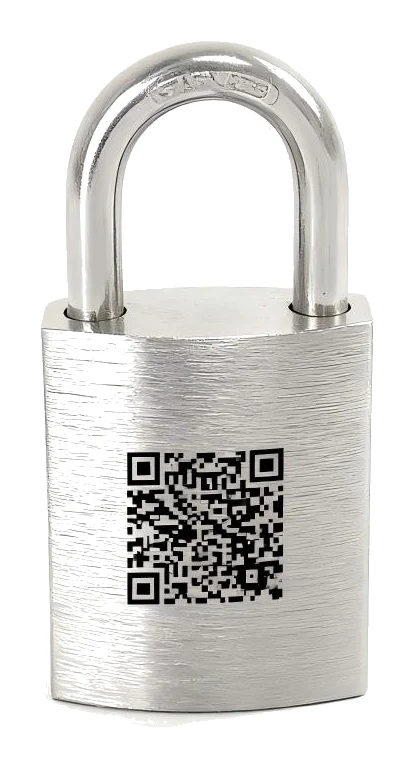
The key carries the battery, the fingerprint and the permits
The FPB-02 is a compact ABS key, about 46 × 25 mm. It holds the fingerprint sensor, a rechargeable battery charged over USB-C, a real-time clock and a Bluetooth link to the technician's phone.
The Bluetooth stops at the key. The lock has no radio, so there is nothing on the cabinet that can be scanned or reached remotely. When the key runs flat, nothing changes at the lock: charge the key, or pick up a spare.
- Up to 10 fingerprints, matched on the key
- Up to 500 work-order permits
- Records carried from the lock to the app
- One key opens every lock its permits cover
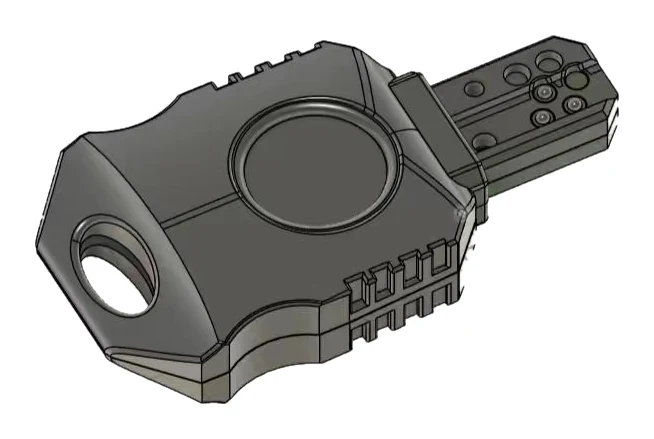
| Body and shackle | Stainless steel |
|---|---|
| Body | 40 × approx. 42 × 21 mm (W × H × D) |
| Overall height | 77 mm |
| Shackle | Ø6 mm; clearance 24 mm horizontal × 29 mm vertical |
| Weight | 170 g |
| Power | None in the lock — supplied by the key while it is inserted |
| Radio | None |
| Records | 50,000, tamper-evident; an edited or deleted record is detected at read-out |
| Key insertion | Either way up |
| Working range | −35 °C to +75 °C (design target) |
| Protection | IP67 (design target) |
| Housing | ABS |
|---|---|
| Size | Approx. 46 × 25 mm |
| Identity | Fingerprint, up to 10 per key, enrolled and matched on the key |
| Permits | Up to 500 per key |
| Link to phone | Bluetooth LE, AES-128 encrypted |
| Battery | Rechargeable lithium-polymer, USB-C charging |
| Protection | IP65 (design target) |
| Authorisation | Platform-issued work-order permits with a time window and optional step number, checked by the lock offline |
|---|---|
| At the lock | No wiring, no network, no power |
| Lost key | Revoked once on the platform; permits expire on their own |
| Biometric data | Stays on the key; the platform stores none |
| Platform | Hosted, or on your own servers; API for your permit-to-work system |
Frequently asked questions
Does a passive lock need a battery or wiring?
No. The PLC-40 has no battery, no wiring and no radio. It is powered by the FPB-02 key through contacts inside the bore, and only while the key is inserted.
What happens when the key battery runs flat?
Nothing changes at the lock — it has no battery and stays locked. The key reports its charge to the app and recharges over USB-C, and a crew can carry a spare key. The locks themselves never need charging.
Is a mobile signal needed at the site?
No. Permits are loaded onto the key before the job, opening and close confirmation work offline, and the records upload the next time the phone connects. That suits basements, tunnels and rural sites.
A key is lost. What now?
It cannot be used without an enrolled finger. Its permits expire at the end of their time window, and it is revoked once on the platform. No lock is re-keyed or visited.
Can one key open many locks?
Yes. A key opens whatever its permits cover — one lock, a group or a whole zone — and any number of keys can be issued for the same lock, because the lock checks each permit rather than keeping a list of keys. For battery locks opened from a phone, see the Bluetooth padlock.
Is it available now?
The PLC-40 and FPB-02 are newly designed and not yet in volume production. Samples are available on request for evaluation and pilots.
The platform and app behind it are the ones already running our electronic locks. See utility and site access and Platform & App.
Locks that carry their own battery
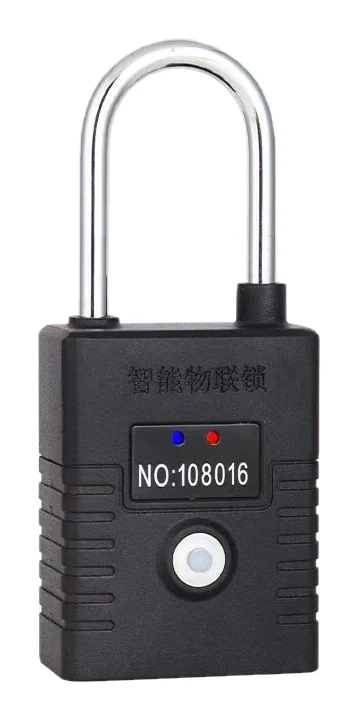
Bluetooth Padlock and Cable Seal
No SIM and no monthly fee. The operator's phone opens it on an authorised, logged permit.
Learn more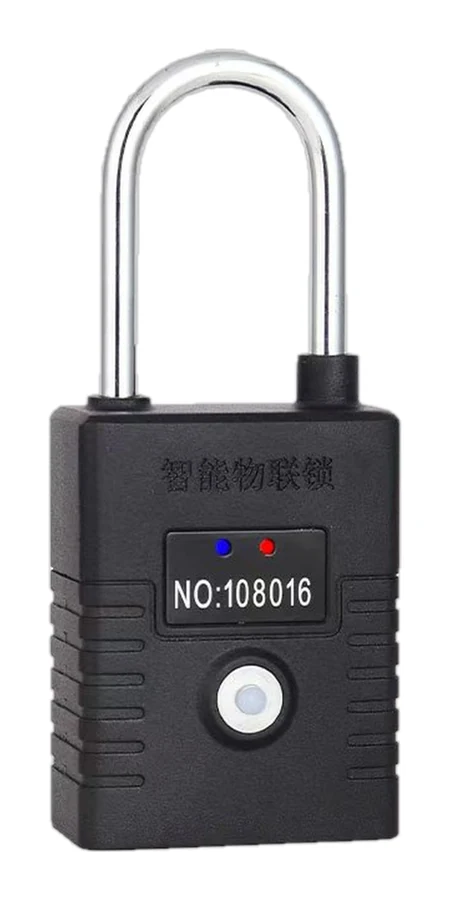
LoRa Smart Padlock
Shackle padlock or cable seal on LoRa. One gateway serves about 50 locks; no SIM in the lock.
Learn more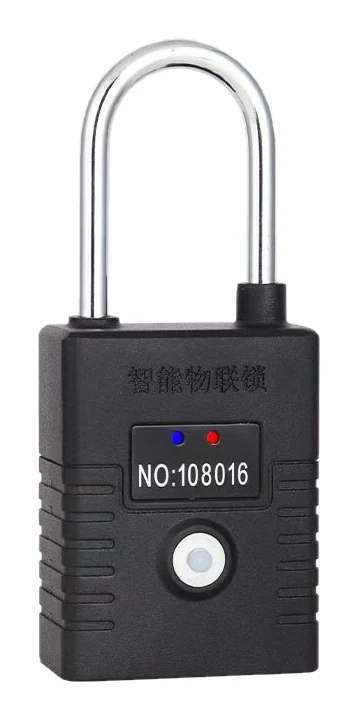
4G Smart Padlock
Shackle padlock with its own 4G link for gates, fences and cabinets on unattended sites.
Learn moreSamples and pricing for the PLC-40 and FPB-02
Tell us the sites, roughly how many locks and how many technicians, and whether you work to a switching sequence. We reply within one business day.